
The scope of the Services to be delivered by the Consultant are split into environment, health and Safety, and Social Safeguards:
Provision of independent safeguards monitoring and supervision and is intended to supplement the regular efforts. UNCU assess issues instructions for remediation action, in coordination with the Supervising Engineers, and the technical team.
Supervision and Administration:
– During the contractor’s mobilization period, the consultant shall carefully check whether the Contractor has obtained all the required statutory approvals before the commencement of Works;
– Ensure the signature of the ESHS Code of Conduct by all workers and their compliance with the specified ethical expectations and prohibited inappropriate behaviours.
– Monitor the Contractor’s and Sub Contractor’s performance to ensure that all Workers have signed Employment Contracts.
– Initiate or participate in the establishment and building the capacities of the desired structures including Grievance Redress Committees and Safety Committees.
– Review and clear the Contractor’s Environmental and Social Management Plan (C-ESMP) and safeguards management work plans and transmit it to the Wakiso District Local Government technical team and PST for further review and approval
– Participate in joint inspection with the Engineer, in the presence of the Employer, of the project sites to facilitate technical discussions with focus on safeguards management.
1.1 Environmental Safeguard Monitoring and Supervision
– Assist the Client in overseeing the implementation of the Contractor’s Environment and Social Management Plan (C-ESMP), to ensure compliance.
– Advise the Client, and the Engineer on progress with the Contractor’s applications for permits or consents in line with laws, regulations, and World Bank E&S safeguards.
– Ensure that the Contractor is made aware of the mitigation measures as specified in the C-ESMP and included in the contracts.
– Ensure that the Contractor and their sub-contractors adhere to the day-to-day requirements of the Contractors-ESMP (C-ESMP), Occupational Health and Safety (OHS), the environmental and social safeguard requirements under national law (including conditions of consent), and the World Bank’s – Environmental and Social standards.
– Provide technical guidance to contractor in developing relevant site-specific interventions including Traffic Management Plans prior to the Clients endorsement.
– Undertake regular environmental monitoring as outlined in the C-ESMP; monitor compliance with environmental mitigation and management plans, Contractor’s health and safety plan, as well as requirements in Codes of Conduct (CoCs); also undertake monthly inspections of the Contractor’s ancillary facilities including the worker’s camp, equipment yard, borrow pits, stone quarry sites, etc, to record compliance.
– Regularly monitor the project Grievance Redress Mechanism (GRM) and provide support to the Client for resolving any issues related to the Contractor or construction activities.
– Monitor the Contractors’ monthly air quality and noise monitoring activities including ensuring that the equipment is calibrated, to ensure accurate data, consistency and provide the necessary recommendations to improve the efficiency.
– Prepare an EMP compliance assessment report after each site visit is conducted which should inform the monthly progress reports on environmental safeguard compliance;
– Review the Contractor’s monthly E&S compliance reports, and compile quarterly environmental, and social monitoring reports.
– Monitor the contractor’s stakeholder engagement activities in line with their stakeholder engagement plan, and make necessary recommendations to that effect.
– In monitoring the Contract implementation, UNCI facilitates and guides to minimise the negative impact of the project.
– UNCI monitor and supervise the activities with and around the project sites, as well as non-site activities such as worker’s camps, stone quarries, lay down areas, etc.
With regard to OHS:
– Ensure that the Contractor adheres to their OHS Management Plan;
– Ensure that all workers are provided with, and appropriately use proper personal protective equipment (PPE).
– Regularly review the OHS incident register as well as activities on site to identify any potentially dangerous practices or issues.
– Conduct regular inspection of the construction site, at least on a monthly basis to conduct safety audits.
– Monitor the contractor’s activities at their auxiliary facilities including material sources including the barrow pits, quarry site(s), and material dump sites to ensure compliance with the national legal framework and conditions in the statutory approvals (permits or licenses).
1.2 Social Development and Right of Way/Involuntary Resettlement Supervision
UNCI does the following:
– In collaboration with the employer’s technical team and Social Development Specialist (SDS) of the Program Support Team, monitor and report any issues arising from the Right of Way inventory (RoW) implementation, if required.
– Ensure that the project implementation fully complies with the measures established in the RoW inventory/RAP.
– Monitor construction works’ social impacts, including potential impacts on physical and economic displacement, and timely discuss them with the employer’s technical team and PST’s SDS.
– Ensure, to the extent possible, that construction works won’t create any physical displacement or extend beyond the space acquired through consents.
– In the event unanticipated impact is encountered, communicate to the employer’s technical team and PST’s SDS and ES, the need to prepare additional Right of Way and facilitate their development.
– Work with employer and PST to ensure an effective project’s GRM at the project level is operational before the starting of any construction; regularly assess the functionality and performance of the project’s GRM.
– Report to the client any project-related concerns, queries and complaints registered from the PAPs, local authorities and other stakeholders.
– Assist the Client in addressing safeguards related complaints throughout the implementation of the project.
– Ensure that the contractor does not involve child or forced labor in the execution of the civil works contracts in accordance with the provisions of the contract agreement.
1.3 OHS, HIV/AIDS, Gender Based Violence (GBV) and VAC Prevention:
UNCI’s Roles:
– Supervise the Contractors in all matters concerning occupational health, safety and care of the works, workers, and local communities.
– Ensure that all persons working on the project (Contractors and Sub-contractors) sign the CoC and fully understand its content.
– Monitor compliance with the CoC of all persons working on the project; Ensure that all persons working on the project at managerial levels comply with the provisions of the CoC.
– Ensure the contractor is supervising his/her workers and reporting inappropriate behaviours based on the CoC requirements.
– Monitor the Contractors activities to ensure that all persons working on the project have received.
(i) OHS training.
(ii) HIV/AIDS education.
(iii) sensitisation on GBV, and violence against children (VAC), including child labour in accordance with the Contract and relevant national regulations.
– Monitor the Contractor’s compliance with and performance of required actions regarding HIV/AIDS, human trafficking, child and forced labor and labor core standards in accordance with the contract documents.
– Coordinate with the Client and the Engineer to instruct the Contractor to take actions in line with the requirements of the Contract to ensure compliance with the requirements of the project for addressing OHS, HIV/AIDS, GBV and VAC prevention.
– Ensure that the GBV Action Plan is submitted prior to mobilization, and observe to ensure that the plan is fully implemented.
– Ensure that any workers camps and equipment yard are managed in accordance with the recommendations of the C-ESMP, OHS plan and the guidance.
1.4 Support Client in clearing and supervising the Contractor’s ESMP (C-ESMP)
Prior to the contractor commencing civil works, UNCI in consultation with the Client, the Engineer and PST.
Conduct the preliminary review of the C-ESMP: The Consultant’s Environmental specialist and the Social Development Specialist shall review the C-ESMP to ensure that it meets the requirements of:
(i) the respective project ESMPs.
(ii) fully complies with relevant national laws, including any conditions of consent.
(iii) meets the international Environmental, Health and Safety (EHS) Guidelines and environmental and social standards.
– Active Supervision of the C-ESMP: UNC’s Environmental Safeguard Specialist and the Social Development Specialist shall have the duty to supervise the implementation of the C-ESMP to ensure the project complies with environmental and social safeguards standards, national laws and policies.
– Identify and report to the Client any changes to project design or construction methods which would trigger an update to the C-ESMP. Changes to works or methods should be assessed against the existing Project Area of Influence (PAI) and whether there is a likely public interest aspect to the changes. If either the PAI (geographically, socially or environmentally) has changed or if there is a public interest element to the changes, then the safeguard instruments shall be updated by the consultant and the Contractor as required and re-disclosed.
– Share with the client all C-ESMP and supervision sheets including the non-conformance trackers.
– Keep and provide all records in the monthly reports of all changes and assessments regardless of whether an update to safeguard instruments is triggered.
– Coordinate reviews of safeguards instruments with the employer, compiling comments, making amendments and approving as required.
1.5 UNCI’s Social Safeguard Specialist roles:
– Work with the Client’s team to supervise RAP implementation and where necessary, PAP compensation; and ensure that social mitigation measures proposed in project ESIA are considered in design and implementation.
– Ensure that un envisaged social risks and impacts are properly and timely addressed;
– Monitor contractors’ compliance to social safeguards.
– Coordinate with key stakeholders in resolving project implementation issues; and
– Prepare social safeguards reports.
– Coordinate with the client, in the supervision of the signing of ESHS Codes of Conduct (CoCs).
– Supervise the GRM functioning to ensure that the protocols are being followed in a timely manner, and complaints properly addresses; Referral processes are applied referring complaints to an established mechanism to review and address GBV complaints.
– Verify that GRM measures to handle GBV cases are in place and work correctly.
– Verify that CoCs are signed by all those with a physical presence at the project site.
– Ensure requirements in CoCs are clearly understood by those signing.
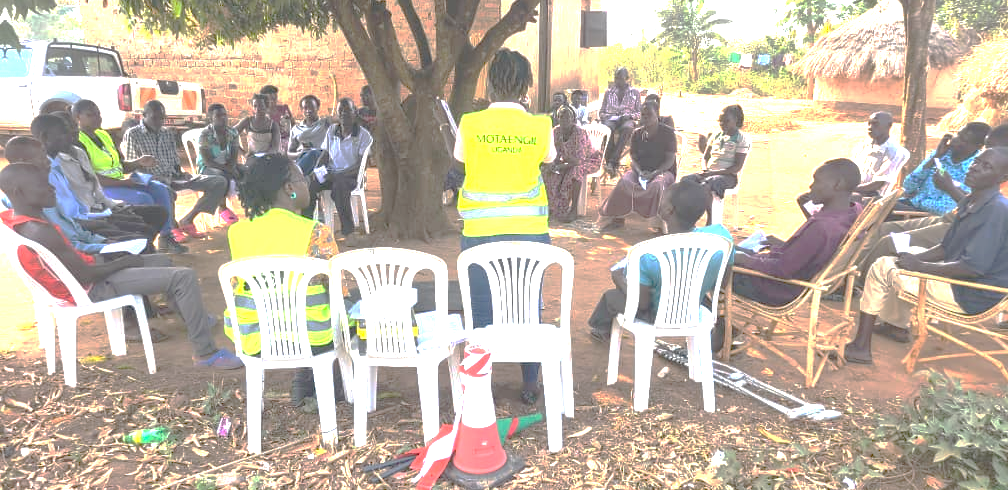
– Train project-related staff on the behaviour obligations under the CoCs.
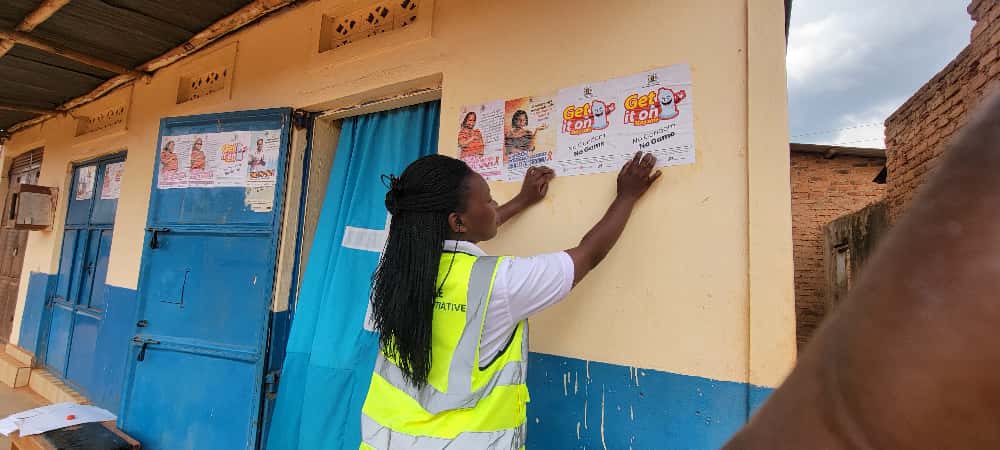
– Disseminate CoCs (including visual illustrations) and discuss with employees.
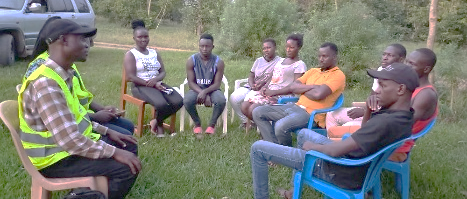
– Have project workers and local community undergo training on GBV, VAC, HIV/AIDS, OHC and SH.
– Undertake regular M&E of progress on GBV activities, including reassessment of risks as appropriate.
– Set-up internal monitoring plan/system that broadly ensures environmental issues and measures are efficiently monitored.
– In the context of management of labour influx, monitor and guide the operation of a worker grievance redress mechanism for project workers in line with the project Labour Management Procedures (LMP) and ESS2.
1.6 UNCI’s Environmental Specialist roles:
– Ensure environmental mitigation measures proposed in project ESIA and C-ESMP are considered in project detail design.
– Review the Contractor’s ESMP and the OHS plan proposals (with support from the OSH support staff).
– Supervise and monitor C-ESMP and OHS plan implementation and ensure the submission of the quality reports.
– Set-up internal monitoring plan/system that broadly ensures environmental issues and measures are efficiently monitored.
– Supervise the contractors’ performance to ensure that every worker is paid in a timely manner and per contract agreement; independent audits of OHS performance on the project.
– Coordinate with key stakeholders in dealing with and resolving environmental issues relating to the Project.
– Monitor the implementation of Waste Management Plans, air quality and noise monitoring plans among others.
– Prepare the required environmental reports for submission to the entities and the PST, among other tasks.
1.7 UNCI’s Environmental and Social Safeguards roles:
– Coordinates the E&S safeguards officers and liaise between the Contractors, Entities and the Key Experts.
– The E&S Safeguards Team under takes to coordinate the non-key/additional technical personnel of the consultant, prepare workplans in coordination with the Team Leader, identify and take a record of emerging issues to the attention of the key staff and lastly, coordinates the emergency/incident handling process and track all the grievances arising during the project implementation.
1.8 UNCI’s Health and Safety Teams’ roles
The role of a Health and Safety Officer in the supervision of road construction is crucial for ensuring that safety standards are met and risks are managed effectively. Here are some key responsibilities:
Risk Assessment and Management:
– Assess risks specific to urban road construction, such as high traffic volumes, congested areas, and interaction with pedestrians and commercial activities.
– Identify risks associated with climate, which includes heavy rains and high humidity, potentially affecting construction site conditions.
– Ensures that all potential impacts on public and occupational health and safety are properly addressed in the Contractors’ Environmental and Social Management Plan, and are captured in the Contractors’ monthly reports.
Safety Planning and Compliance
– Ensure compliance with local regulations such as The Occupational Health and Safety Act, 2006, and the National Environment Act, No. 5, 2019.
– Oversee and support the development and preparation of Occupational and Public health and safety plans that address the complexities of working in a busy urban environment, including coordinating with Uganda Police for traffic management and public safety.
Training and Awareness
– Provide training tailored to the diverse workforce among the various contractors’ staff, ensuring that workers understand urban-specific hazards and safety practices.
– Ensure the use local languages and consider varying levels of literacy to make training accessible and effective.
Monitoring and Inspections
– Regularly inspect active road construction sites to ensure adherence to safety standards, paying attention to urban-specific issues like road signage, pedestrian safety, and the impact of construction on traffic flow.
– Monitor the contractors’ compliance with local safety regulations and standards set by the government of Uganda and any guidelines from relevant authorities such as the Ministry of Labour, Gender, and Social Development.
Incident Investigation
– Investigate accidents with a focus on factors, such as high traffic density and interaction with the public and safety furniture among others.
– Ensure that Contractors work with local hospitals and emergency services to address any issues related to the accessibility and quality of medical care in the city.
– Ensure that the incident investigation and reporting is consistent with the World Bank’s Environmental and Social Incident Reporting Tool (ESIRT)
Safety Communication:
– Facilitate effective communication between the project team and a diverse urban workforce and the general public about safety practices and construction impacts.
– Ensure safety messages are spread through the use various communication channels, including local media, community notices, and direct outreach to affected residents and businesses.
Emergency Response:
– Ensure that Contractors develop emergency response plans that account for Kampala’s urban layout, including potential traffic congestion and access to emergency services.
– Initiate coordination with the employer and local emergency services to ensure a swift and effective response to any incidents.
Documentation and Reporting:
– Maintain comprehensive records of safety inspections, incidents, and compliance activities, aligned with the relevant national laws and regulations.
– Ensure that reporting practices are efficient and transparent, and are consistent with the guidelines in the World Bank ESIRT.
Promoting a Safety Culture
– Promote a safety culture that engages with the urban community, emphasizing the importance of safety in a high-traffic, densely populated environment.
– Encourage safe practices through community engagement, such as public awareness campaigns and collaborations with local businesses and residents.
Coordination with Other Stakeholders
– Work closely with the project’s implementation team, local businesses, and community leaders to ensure that road construction activities are well-coordinated and that safety measures are integrated into urban planning and traffic management strategies.
– Address specific challenges, such as coordinating road closures and managing the impact of construction on local traffic and commerce
1.9 UNCI’s Environmental Officer Roles:
– Keep all the necessary records relating to the implementation of the project, including waste management, air quality and noise measurement among others.
– Monitor and conduct timely notification on all environmental incidents in line with the Environment and Social Incident Reporting Tool of the World Bank;
– Participate in the activities of the Safety Committees associated with the handling of the ESHS incidents;
– Conduct routine site visits and provide the necessary guidance with regard to the handling of environmental aspects;
– Monitor the implementation of the waste Management Plan to provide guidance for reducing, handling, and disposing of waste during construction or land-clearing;
1.10 UNCI’s Social Officer Roles:
– The Sociologists perform various activities in support of the Social Development Specialist including;
Routine monitoring of gender-based violence, sexual exploitation and abuse, and sexual harassment (GBV/SEA/SH) prevention and response action plan; Grievance Redress Mechanism.
– Provide technical backstopping to the Grievance Redress Committees in addressing any arising grievances from the Contractor’s workers and project affected communities.
– Monitor the Contractor’s progressive management of Labour Influx and use of local labour, including compliance with national laws in relation to terms and conditions of employment, occupational health and safety, and prohibition of forced labour and avoidance of child labour.
– Review the Contractors’ grievance logs regularly to ensure that they are timely updated and that the information is accurate.
– Review and update the social safeguards reporting in the monthly safeguard’s reports and other reports as shall.
1. Improved Community Health and Well-being
1. Increased community knowledge about HIV/AIDS, TB, Hepatitis B, Malaria, COVID-19, Ebola and other health risks.
2. Increased adoption of preventive health practices.
3. Increased uptake of appropriate health services.
4. Improved community capacity to identify and respond to health risks and outbreaks.
2. Strengthened Community and Occupational Health and Safety
1. Communities have improved knowledge and practices regarding health and safety.
2. Workers and employers demonstrate improved occupational health and safety practices.
3. Reduced exposure to preventable health and safety risks.
4. Communities and workplaces have improved mechanisms for identifying, reporting and managing safety risks.
3. Strengthened Social Safeguards and Protection of Vulnerable Groups
1. Increased awareness of GBV, violence against children and other social safeguard risks.
2. Improved prevention and response mechanisms for GBV and child protection concerns.
3. Increased reporting and referral of protection cases to appropriate service providers.
4. Communities increasingly adopt norms and practices that promote safety, dignity, equality and protection of vulnerable persons.
4. Empowered Communities and Sustainable Livelihoods
1. Increased access to livelihood and vocational skills training.
2. Improved knowledge and skills in entrepreneurship and income generation.
3. Increased establishment or strengthening of income-generating activities.
4. Improved household income and economic resilience among targeted beneficiaries.
5. Reduced vulnerability associated with poverty and unemployment.
5. Improved Sexual and Reproductive Health and Rights
1. Increased knowledge of sexual and reproductive health and rights.
2. Increased access to appropriate reproductive health information and services.
3. Improved decision-making among adolescents, youth, women and other target groups.
4. Increased awareness of prevention of unintended pregnancies, STIs and related health risks.
6. Environmental Conservation and Sustainable Development
1. Increased community awareness of environmental conservation.
2. Increased adoption of environmentally sustainable practices.
3. Increased community participation in environmental protection and conservation initiatives.
4. Improved management and sustainable utilisation of natural resources.
7. Research, Evidence Generation and Knowledge Management
1. Increased availability of reliable community-level evidence.
2. Research findings increasingly inform programme design and implementation.
3. Improved documentation and dissemination of lessons and best practices.
4. Stronger evidence-based advocacy and decision-making.
8. Organizational Capacity, Sustainability and Partnerships
1. Improved organisational systems, governance and programme management.
2. Increased staff knowledge, skills and professional capacity.
3. Improved monitoring, evaluation, accountability and learning systems.
4. Increased strategic partnerships and collaborations.
5. Improved resource mobilisation and organisational sustainability.